The Israeli Sandbox: How to Build a Testbed for Construction Technology
Real innovation in construction happens on-site, not in the office. To prove that new technologies work under real conditions, the industry needs a safe, well-managed environment where teams can test them, measure their impact, and draw regulatory and operational insights.
This is where the sandbox concept comes in: A testing ground that balances innovation and accountability, experimentation and risk, technology and implementation. An effective sandbox fosters collaboration between startups, contractors, and regulators, helping move construction and infrastructure innovation forward. But how does such a sandbox actually work in practice?
What Is a Technological Sandbox?
Simply put, a sandbox is a controlled environment where companies can test and refine innovative solutions such as project management applications, sensing and control systems, robotics, or advanced materials, in collaboration with key industry players: contractors, inspectors, regulators, and public bodies.
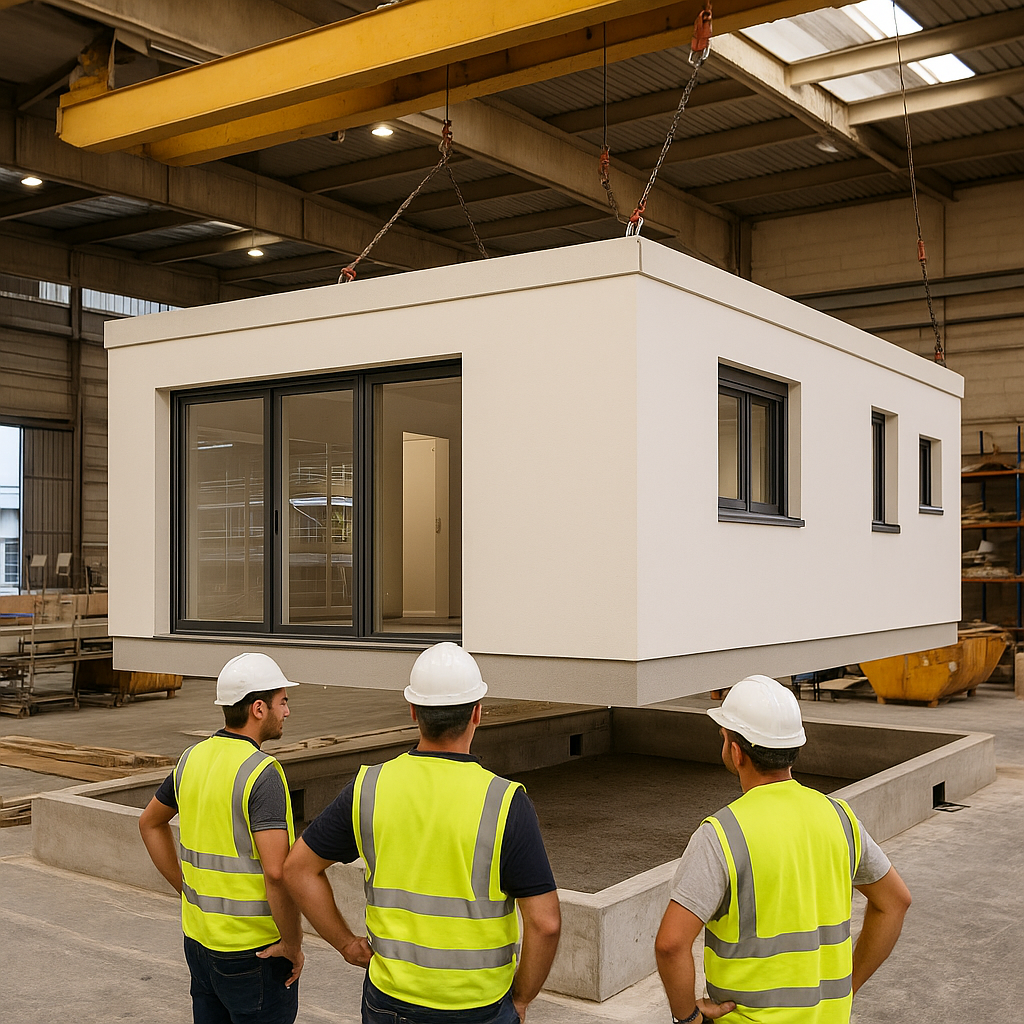
Unlike academic experiments or lab demonstrations, a construction-tech sandbox takes place on a real construction site, under actual field conditions, safety standards, and schedules, but with oversight mechanisms that allow innovation to happen without jeopardizing the project.
The Need for an Israeli Testing Ground
The construction industry is among the slowest to adopt technology, not due to a lack of innovation, but because of the high risks inherent in experimenting with critical systems. No contractor wants to be the “guinea pig” risking timelines, quality, or safety. To overcome this barrier, we need a framework that provides some certainty. Such a framework brings together a regulator that permits controlled deviations from procedures, a developer or contractor providing a live testing site, and a startup offering the solution to be tested.
Collaboration Between Startups, Contractors, and Regulators
An effective sandbox relies on tight cooperation between three key players:
-
The startup develops the solution and commits to a process of learning, measurement, and improvement. It must provide real-time data, analytical tools, and measurement reports that prove its actual value.
-
The contractor or developer offers a live test site, integrates the solution into its workflows, and provides field feedback on usefulness, efficiency, and operational fit.
-
The regulator defines the scope of the experiment, ensures safety, and grants a “protected regulatory space” that allows testing of solutions not yet certified or standardized.
When these three forces work together, they create a cycle of mutual trust, shared learning, and accelerated innovation.
Tools for Measurement, Monitoring, and Control
A testing environment without measurement is merely a demonstration. To produce meaningful insights, advanced monitoring and control tools are essential: sensors, cameras, IoT systems, drones, and digital data collection platforms (including Digital Twin systems).
These tools make it possible to measure key parameters such as execution accuracy, material consumption, safety performance, schedule progress, and compliance with standards. In addition, AI systems can analyze data in real time, detect anomalies, and suggest improvements, turning the sandbox from a “lab for insights” into a management tool serving the entire industry.
Global Inspiration: The UK’s Safety Sandbox
One of the most notable sandbox initiatives originated in the United Kingdom. The Health and Safety Executive (HSE), together with the Safetytech Accelerator, launched the Smarter Regulatory Sandbox, a pioneering initiative to strengthen safety culture in construction.
The sandbox combined direct access to regulatory content with cutting-edge technologies such as AI and on-site cameras. It explored ways to use CCTV footage not only to monitor project progress but also to identify safety risks and detect sites failing to meet safety standards.
Preliminary results showed impressive achievements:
-
Direct access to regulatory data improved the accuracy of language-based AI models by 30%.
-
CCTV analysis enabled efficient tracking of work pace and early detection of safety hazards.
-
Data standards were developed to support automated compliance checks.
What’s Happening in Israel?
In Israel, interest in this field is growing rapidly. Joint initiatives led by ConTech and other technology incubators, in collaboration with the Ministry of Construction and Housing and the Israel Innovation Authority, enable startups to test solutions on live construction sites, under professional and regulatory supervision.
In recent years, these programs have tested smart safety systems, construction site monitoring sensors, and digital tools for the management of quality and inspection, promoting Israeli technology while solving real operational challenges faced by builders.
Flexible Regulation - A Critical Condition
For such a testing environment to operate long-term, smart and flexible regulation is essential. Regulators must permit temporary and controlled deviations from official standards while ensuring full safety and transparency. Through “live regulation”, which updates standards based on actual sandbox results, Israel can shorten the time between development and broad adoption, positioning itself as not just a local but a global testing hub.
Looking Ahead: The Sandbox as National Infrastructure
An Israeli construction and infrastructure sandbox could become a cornerstone of true innovation, turning ideas into practice. It would allow startups to test real technologies, enable regulators to design data-driven policies, and help contractors adopt new tools without unnecessary risk. When government, industry, and innovation work together, they create not just a testing ground, but a national foundation for meaningful change.