From Nature to the Construction Site: Biomimicry as the Foundation for Future Materials and Design
Evolutionary principles from the plant and animal kingdoms are now driving innovative solutions and smart materials
Biomimicry is a scientific discipline that seeks to solve human challenges by studying how nature works and translating these insights into intelligent design. The term combines "bios" (life) and "mimesis" (imitation) and reflects the idea that natural systems, organisms, and processes can teach us how to solve complex problems efficiently and sustainably.
Over millions of years, evolution has perfected solutions for strength, flexibility, durability, material processing, and environmental adaptation, solutions we are only beginning to understand and translate into innovation.
In construction technologies, biomimicry enables a rethinking of how we produce materials, design structures, and manage the environments in which they operate. Instead of relying solely on heavy industrial processes such as extreme heat, intensive mining, or manufacturing uniform, geometrically simple materials, biomimicry focuses on imitating natural principles: forms that provide strength, natural mineral-creation processes, textures that reduce wear, and solutions that help a structure blend into - or even rehabilitate - its surrounding environment.
The result is a shift toward materials and design approaches inspired by how nature works: more flexible, more energy-efficient, and more environmentally adaptive. In other words, nature provides the operating principles, and engineering innovation translates them into smarter construction technologies.
Several leading construction-materials startups in Israel and worldwide have already replicated natural principles and turned them into advanced building solutions. Below is a brief overview of technologies inspired by shells, minerals, crystal structures, and even evolutionary movement, and how they are translated into engineered products, new manufacturing methods, and planning models.
Concrete Inspired by Seashells: Marine Infrastructure that Restores the Environment
The ocean presents some of the greatest engineering challenges: erosion, pressure, warming, pollution, and rapidly changing conditions. Organisms such as shells, corals, and marine invertebrates have evolved the ability not only to withstand these forces but also to build stable ecosystems around them.
ECOncrete applies these same principles and translates them into engineering language. The company has developed marine concrete based on nature-inspired textures and geometries that increase surface area and encourage colonization by marine organisms. The result is not only more durable concrete, but also ecological benefit: marine structures that transform from “dead” concrete into the foundation of a restorative ecosystem. Instead of fighting against nature, the material works with it.
This is a striking example of a construction approach rooted in a core evolutionary principle: mutualism, creating material that adapts to its environment, while the environment, in turn, contributes to strengthening the structure over time. In such a system, the built structure and the ecosystem are not separate, but mutually supportive, generating long-term resilience and function.
Biomineralization: Mimicking How Nature Builds Bones, Teeth, and Minerals
In nature, minerals form through precise, low-energy processes, without high heat or melting. Biomineralization processes such as bone formation, fish-tooth structures, and coral skeletons create exceptionally strong materials with minimal energy input.
The startup Starstone adopts this principle and applies it to the creation of advanced materials using controlled mineral-growth processes. Instead of melting materials at high temperatures, which is energy-intensive and polluting, the technology enables “growing” material layer by layer, much like nature does. The result is materials with high strength, uniform internal structure, and sustainability levels unattainable through traditional manufacturing.
This represents a profound conceptual shift: from industrial manufacturing to bio-engineered production.
Strength Through Form: Crystal-Inspired Geometries for Low-Carbon Building Materials
One of nature’s most powerful principles is that form creates strength. The structure of a shell, the honeycomb pattern of a beehive, or the crystalline arrangement of minerals all demonstrate how geometry can produce rigidity without more material.
Criaterra’s products are based precisely on this principle. The company produces construction materials made from natural minerals at low temperatures, using geometries that mimic the growth patterns of crystals.
Thanks to these intelligent geometries, the materials achieve performance comparable to traditional building products, and in some cases even exceed them, while dramatically reducing carbon footprint.
This approach bridges natural design with industrial efficiency and sustainability to create more sustainable solutions.
Inspired by Animals: Robotics on the Construction Site
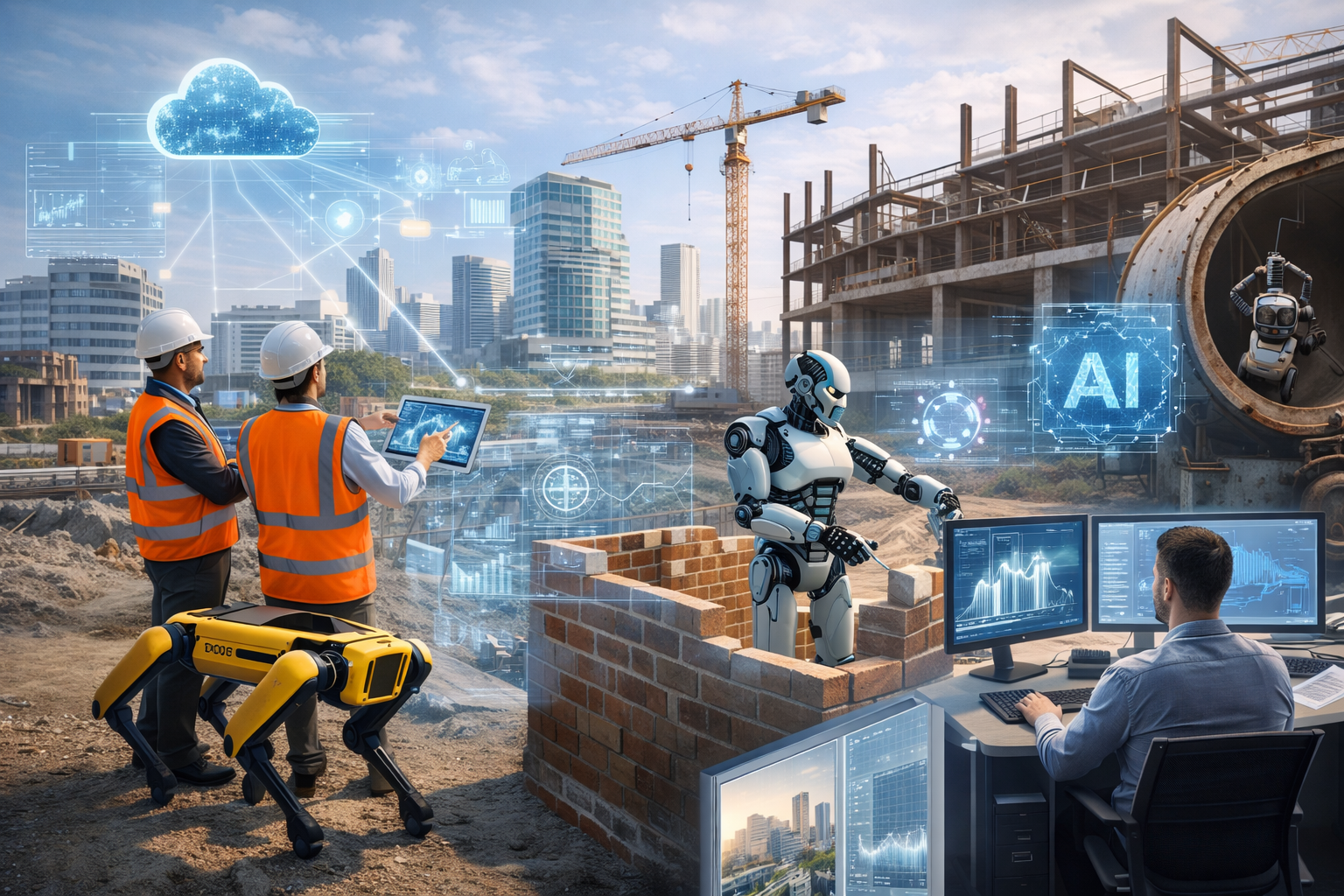
Biomimicry extends far beyond materials. The robot SPOT is a clear example of how biological principles influence system movement and behavior in complex environments.
Its mammal-like structure, four flexible legs, and intuitive ability to maintain stability while navigating uneven terrain are rooted in evolutionary traits of animals that adapt to unpredictable surroundings.
This biomimetic movement makes SPOT a platform capable of handling a wide range of tasks.
Recent research, including a 2024 pilot for material-inventory management using RFID, demonstrates how nature-inspired movement allows robots to respond to real-world variability in ways traditional machines cannot.
Instead of rigid mechanical motion, SPOT interprets its environment, adapts to it, and becomes a basis for more dynamic monitoring, documentation, and planning processes.
The Evolution of the Construction Industry
In the coming decades, we can expect to see increasing adoption of evolutionary principles in construction innovation:
-
structures adapted to local climates
-
materials that strengthen rather than degrade over time
-
geometries inspired by organic growth
-
and robotics that navigate complex environments like living organisms
This marks a shift from a mindset of “controlling the environment” to one of “working with the environment.”
The true value of biomimicry lies in its return to nature’s precision and simplicity:
reducing waste, increasing efficiency, enabling clean production, and restoring ecosystems.
It allows us to build not only stronger, but smarter.
And most importantly: in a way that respects the ecosystem we live in.